SOLUTIONS·Bilingual Answering Service
A bilingual answering service configured for law firms.
ClaireAI handles inbound calls in 10+ languages, including English and Spanish, and follows the intake, routing, booking, and next-step workflow you configure with us.

ClaireAI in Spanish and English
10+
languages available for call handling, including English and Spanish.
ClaireAI product
Varies
implementation timing is confirmed with your firm.
ClaireAI implementation
$129
per month starting plan price for 400 connected AI minutes.
ClaireAI pricing
Why ClaireAI
A bilingual answering workflow configured for your firm. Call handling, routing, booking, and next steps set with your team.
Bilingual call handling configured for your firm.
ClaireAI supports call handling in 10+ languages, including English and Spanish. During implementation, your firm determines the greeting, intake questions, routing, booking, escalation, and next-step workflow that should apply to the calls ClaireAI handles.

Your intake questions, in the workflow you approve.
A bilingual workflow should fit the way your firm handles callers, rather than force your team into a generic script. ClaireAI can follow the intake questions and next-step rules your firm approves, with the coverage, routing, and review requirements discussed during implementation.
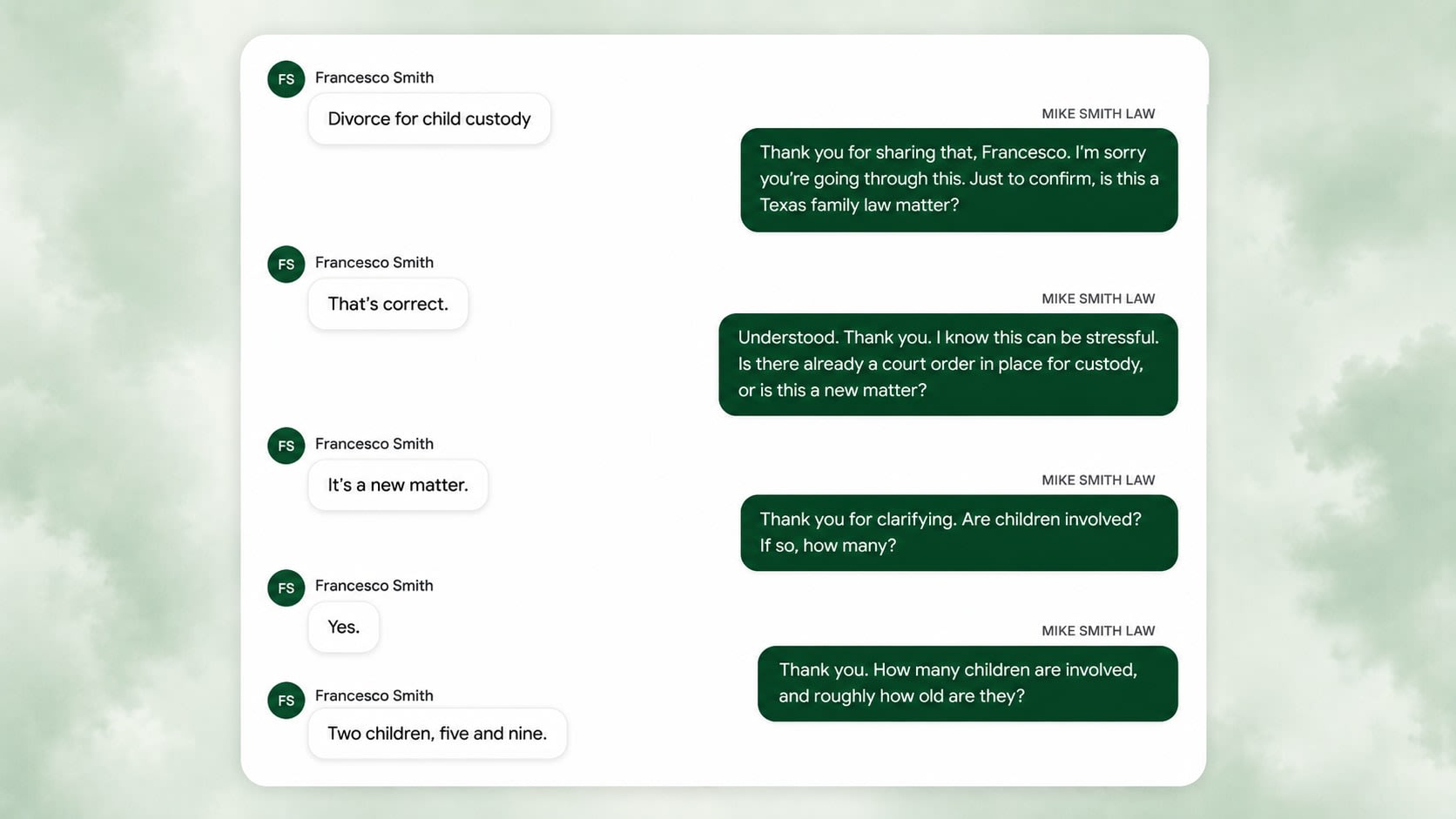
A clear next step for every caller.
Your firm defines what should happen after the call: a booking, transfer, escalation, follow-up, or another next step. During implementation, ClaireAI confirms the connected systems, data flow, and workflow details needed to support the process your team wants to run.

Security & privacy
Built for legal data.
Security documentation
ClaireAI can provide current security and product documentation during a sales or implementation review.
Firm-led compliance review
Each firm is responsible for evaluating its own professional, privacy, security, recording-consent, and compliance requirements.
Workflow review
Recording, retention, routing, and data-flow requirements are reviewed with your firm before launch.
Implementation documentation
Your firm can review the current product and security documentation during its sales and implementation process.
Related solutions

Legal Answering Service
Configured inbound-call handling for after-hours coverage, overflow, and the next step your firm chooses.

Virtual Receptionist for Law Firms
Configured call handling, routing, booking, and escalation for your firm's inbound workflow.

Legal Intake Service
Configured intake questions, routing, booking, escalation, and next steps for your firm's inbound calls.
FAQ
Bilingual call handling, answered.
What is a bilingual answering service for a law firm?
A bilingual answering service handles a law firm's inbound calls in more than one language. ClaireAI supports call handling in 10+ languages, including English and Spanish, and follows the intake, routing, booking, escalation, follow-up, and connected-system workflow your firm configures during implementation.
Does ClaireAI work as a Spanish answering service for attorneys?
Call handling is available in 10+ languages, including English and Spanish. The greeting, intake questions, routing, and next-step workflow are configured with your firm during implementation.
How is a bilingual call workflow configured?
During implementation, your firm determines the intake questions, routing, booking, escalation, follow-up, and connected-system workflow that should apply to the calls ClaireAI handles. The implementation discussion covers the coverage, review steps, and next-step rules your team needs.
Can ClaireAI route calls and book consultations?
ClaireAI can follow the routing and booking workflow your firm approves. The calendar, confirmation, transfer, escalation, and next-step rules are configured with your firm during implementation.
What should we review for a multilingual handoff?
Identify the languages your callers use, the staff member who will receive each handoff, and the details that person needs. Review those requirements with ClaireAI before approving a connected-system workflow.
How do we plan language coverage before launch?
Bring your language requirements to the implementation discussion, including the greeting, intake questions, and escalation contact. Your firm's scope determines the setup plan and timing; a language listing alone does not define that plan.
What does a bilingual answering service cost with ClaireAI?
Public plans start at $129 per month for 400 connected AI minutes. Review the current pricing page for included connected minutes, plan features, and billing terms, then discuss your language requirements in a demo.
Give callers a configured next step.
Book a 40-minute walk-through. We'll show how Claire can follow a bilingual inbound-call workflow configured for your firm.